
Defining “Retro” vs. “Vintage” for AC Milan Shirts
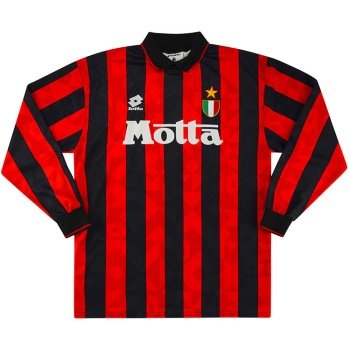
A vintage AC Milan shirt is the actual shirt produced for a specific season—for example, the 1993/94 home shirt made by Kappa with the Opel sponsor. It was originally worn by players during that campaign. A retro shirt, in contrast, is a modern reproduction of that same design, often released years later by manufacturers like PUMA or by third-party replica makers. The key difference is age and authenticity: vintage shirts have historical provenance and may show natural wear (fading, slight pilling), while retro shirts use modern fabrics, fit contemporary sizing, and cost less. For collectors, only original vintage shirts hold long-term investment value; retro shirts are better for casual wear or for fans who want the look without the fragility of a 30-year-old garment. Within vintage, long-sleeve editions are rarer than short-sleeve because fewer long-sleeve shirts were produced for retail and match-issue, making them more desirable for high-end collections.
- Vintage – original from the season; authentic but delicate; higher collector value; long-sleeve variants carry a premium.
- Retro – modern reproduction; durable and comfortable; lower resale value; long-sleeve options available in recent reissue lines.
The Most Sought-After Seasons: 1993/94, 1996/97, and Beyond
Certain AC Milan seasons are iconic because of on-pitch success and distinctive design. The 1993/94 shirt is instantly recognisable: wide red-and-black stripes, the Kappa logo, and the Opel sponsor. This was the shirt worn during the 4–0 Champions League final win over Barcelona, a match often called the “Masterpiece of Athens.” The 1996/97 season introduced a different aesthetic—thinner stripes (the “strepen” style) and a Lotto sponsor (Lotto sponsored Milan from 1994 to 1998). That shirt was worn by George Weah, Roberto Baggio, and a young Alessandro Costacurta. Both seasons produced long-sleeve versions that are now extremely scarce: match-worn or player-issue long sleeves from the 1990s regularly sell for double the short-sleeve price. Other sought-after seasons include the 2002/03 shirt (Champions League win) and the 2006/07 kit associated with Kaká. Each era has its own stripe width, sponsor, and available sleeve lengths, making it easy to date a shirt if you know what to look for.
Key Players and Iconic Moments That Drive Value
The emotional connection to a player or a match significantly increases a shirt’s value. A shirt from the 1993/94 season associated with Paolo Maldini or Franco Baresi commands a premium because those players are defensive legends. Similarly, a 2007 shirt with Kaká’s name and number 22 (his Champions League winning season) is highly sought after by younger fans. However, a shirt from a specific match—like the 2003 final against Juventus—is far rarer and more expensive than a standard season-issue shirt. The presence of original printing (player name, number, patch) is critical; later-added prints reduce authenticity and value. Long-sleeve versions worn by specific players in high-profile matches (e.g., Maldini in the 1994 final) are among the most valuable pieces a collector can acquire.
Stripe Width, Badge, Sponsor – and Sleeve Length – The Critical Season Identifiers
Many fans think all AC Milan home shirts are the same, but stripe width changed nearly every season from the 1980s to the 2000s. The 1993/94 shirt has very wide, bold stripes (roughly 7 cm), while the 1996/97 shirt has thinner stripes (about 3–4 cm). The badge also evolved: earlier versions had the club crest with a gold star, later ones added the Italian flag or changed the embroidery style. Sponsors are another giveaway: Opel (1994–2002), bwin (2006–2010), and Fly Emirates (2010–present). A shirt with the wrong sponsor or badge for its claimed season is a red flag for inauthenticity. To verify, compare the shirt to match photos from that season—especially the stripe pattern, sponsor placement, and sleeve length (for long-sleeve versions, cuffs and sleeve stripes often differ from modern reprints).
Condition, Sizing, and Authenticity – The Real Tradeoffs
Condition directly affects price. A mint-condition shirt (never worn, with original tags) can fetch two to three times more than a lightly worn example. Heavily used shirts with cracked print, pilling, or stains are cheap but lose collector appeal. Sizing is another trap: vintage AC Milan shirts from the 1990s fit differently than modern shirts. A size L from 1993 is closer to a modern M—shorter in the body and narrower in the chest. Player-issue shirts (match-ready) are even more fitted and often have no size tag, only a player-specific label. For long-sleeve variants, sleeve length and cuff construction vary by manufacturer: Kappa long sleeves from the early 1990s have a ribbed cuff, while Lotto used a different cuff style. For authenticating, common fakes include wrong material (polyester blend instead of the period-correct cotton-poly mix), incorrect print fonts, and missing or inconsistent size tags. Always ask for close-up photos of the inner tags, the sponsor print, and the cuff area if you are buying a long-sleeve shirt.
-
- Mint condition short sleeve (vintage) – €150–400
- Mint condition long sleeve (vintage) – €250–600
AC Milan 1993/1994 Thuis Shirt (L)
- Lightly worn vintage – €100–250
- Modern retro reproduction (any sleeve) – €70–120
- Player-match version – €800+ (long sleeve often exceeds €1200)
Market Realities – Why You Must Act Fast and Inspect Carefully
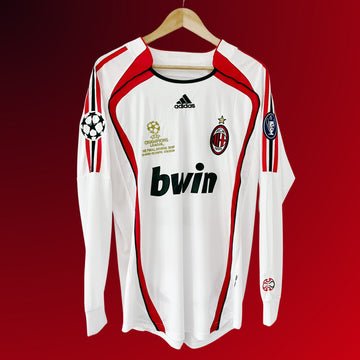
Most vintage AC Milan shirts are one-off listings. Once sold, they rarely reappear, because they come from private collections or old stock. Price is driven by season, player association, condition, size, and sleeve length. Rare sizes like XL or XXL from the 1990s command a premium, and long-sleeve shirts in those sizes are exceptionally rare. There is no fixed price list; sellers price based on emotion and scarcity. The best strategy is to check recently sold comps on eBay or specialist vintage stores, and if you see a 1996/97 Lotto long-sleeve shirt in XL with minor wear at €250, buy immediately—it will be gone within hours. Fakes are common, especially for high-demand seasons like 1993/94, so always inspect tags, material, print alignment, and cuff details.
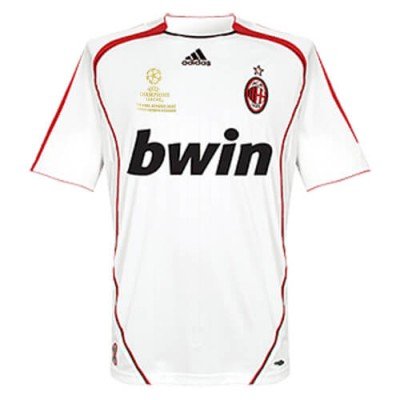
Details
Who Should Buy What? Direct Scenarios
The collector should target rare player-issue shirts from Champions League winning seasons (1993/94, 2002/03, 2006/07), preferably in long-sleeve. Budget €500 or more. These hold value and historical significance. The nostalgic fan who wants a wearable shirt from the Kaká or Van Basten era has two routes: a modern retro reproduction (€70–120) from PUMA (including long-sleeve options in recent reissues) or a well-worn original in decent condition (€100–250). The original offers soul and investment potential; the retro is comfortable and cheap. The budget newcomer should start with a recent PUMA retro line (e.g., the 2023 reissue of the 1993/94 shirt) or a trusted second-hand replica. Avoid high-risk fakes on auction sites. An honest tradeoff: authentic vintage has emotional and potential financial value, while modern retros hold no resale value but are safe and easy to wear.
Common Questions and Misconceptions
“Is a 2007 shirt retro?” – Yes, if it is an original from that season, but many collectors use “retro” for shirts pre-2000. Terminology can be inconsistent; as long as you know the season, you can decide. “Does a shirt with a famous player’s name always cost more?” – Only if the print is original and the player had a defining moment in that shirt. For example, a Kaká 2007 shirt is valuable because of his Ballon d’Or and Champions League final performance. A generic shirt with later-added printing is not. “Are long-sleeve vintage shirts hotter or less wearable?” – Vintage long-sleeve shirts often have a tighter fit and less breathable fabric than modern ones; they are best for display or careful occasional wear. “Can I wash a vintage shirt?” – Yes, but only cold hand wash, inside out, to preserve badges and printing. Never machine wash or tumble dry.
Verdict
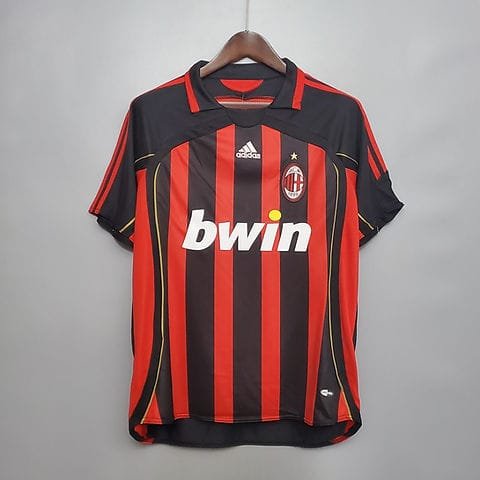
The best AC Milan retro shirt depends on your goal. For investment and historical purity, target a 1993/94 or 1996/97 original from a key player (Baresi, Maldini, Weah) – and if you can find a long-sleeve version with original printing, that is the holy grail. For everyday wear and affordability, buy a modern reproduction of those designs, including the recently released long-sleeve PUMA reissues. Always verify stripe width, sponsor, condition, and sleeve length details before purchasing. The market moves fast, so act quickly when you find the right shirt.
AC Milan retro shirts are more than nostalgia – they are wearable history. By understanding the era-specific details, player context, sleeve length variations, and market forces, you can avoid overpaying for fakes and find a shirt that genuinely connects you to the club’s golden years. Whether you chase the wide stripes of the 1994 Champions League or the slim cut of the 2007 final, the right shirt is out there – but it won’t wait.
Summary
This guide defines AC Milan retro shirts as either original vintage garments or modern reproductions, explains how to distinguish eras using stripe width, sponsors, badges, and sleeve length, and outlines value drivers such as player association, condition, and rarity. Key takeaways: original vintage long-sleeve shirts from iconic seasons (1993/94, 1996/97) hold the highest collector value; modern PUMA reissues offer affordable wear; always verify authenticity through tags and match photos. Next step: decide whether you are collecting for investment (target rare player-issue long sleeves) or casual wear (choose a modern retro), then inspect listings carefully before buying.
Related Guides
FAQ
How can I tell if a long-sleeve AC Milan retro shirt is authentic vintage?
Check the manufacturer’s tag (Kappa, Lotto, Adidas etc.), the material composition (cotton-poly blend for pre-2000, not modern polyester), stripe width consistent with the season, and the cuff construction. Original long sleeves from the 1990s typically have a ribbed cuff; modern reproductions often use a flat knit. Compare sleeve stripe alignment to high-resolution match photos from that season.
Are modern PUMA reissues of AC Milan retro shirts worth buying for collectors?
For casual wear or building a nostalgic wardrobe, yes. They are durable and cost €70–120. However, they hold almost no resale value because they are widely available. Only original vintage shirts, especially rare long-sleeve variants, appreciate over time.
Which player-issue AC Milan retro shirt is the most valuable currently?
Match-worn or player-issue long-sleeve shirts from the 1993/94 Champions League final (Maldini, Baresi, Albertini) consistently sell above €1500. The Kaká 2007 long-sleeve match-issue shirt also commands high prices, typically €1000–€2000 depending on provenance.
Can I wear a vintage AC Milan retro shirt without damaging it?
Yes, but with care. Avoid machine washing, dry cleaning, and direct sunlight. Hand wash in cold water inside out, air dry flat, and never iron directly over the print or badge. Frequent wear accelerates fabric degradation—reserve vintage shirts for special occasions.
Reacties zijn gesloten.